
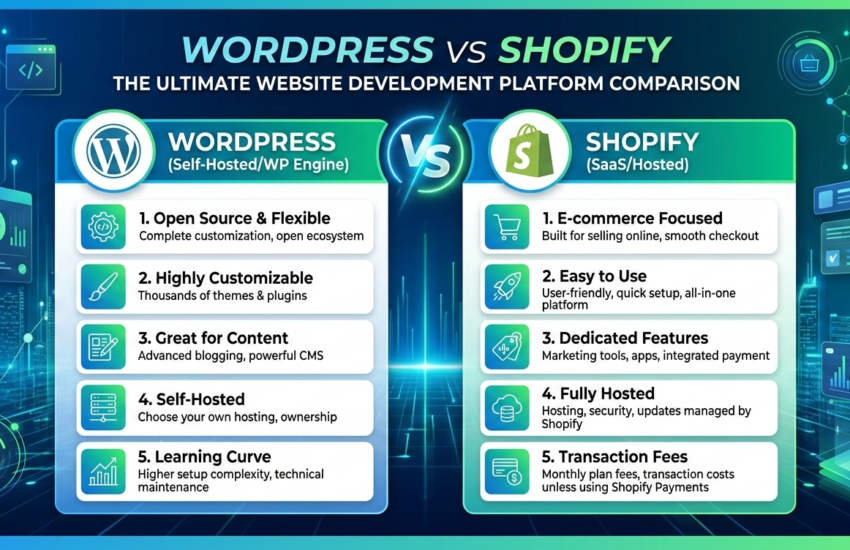
If you’re planning to build a website or start an online store, one of the most common questions is:
Should you choose WordPress or Shopify?
Both platforms are extremely popular and power millions of websites worldwide. However, they are designed for different purposes and business needs.
In this guide, we will compare WordPress vs Shopify in terms of pricing, ease of use, customization, SEO, and scalability so you can decide which platform is best for your business in 2026.
What is WordPress?
WordPress is the world’s most popular website platform. It is an open-source content management system (CMS) that allows users to build any type of website, including blogs, business websites, and e-commerce stores.
Key features of WordPress include:
- Full customization
- Thousands of themes and plugins
- Strong SEO capabilities
- Flexible website design
WordPress powers more than 40% of websites on the internet, making it one of the most trusted platforms for businesses and developers.
What is Shopify?
Shopify is a dedicated e-commerce platform designed specifically for selling products online.
Unlike WordPress, Shopify is an all-in-one hosted platform, meaning hosting, security, and maintenance are handled by Shopify itself.
Key features include:
- Built-in e-commerce tools
- Secure payment gateway
- Inventory management
- Easy store setup
Shopify is widely used by online businesses that want to launch an e-commerce store quickly without dealing with technical setup.
WordPress vs Shopify: Key Differences
1. Ease of Use
Shopify
Shopify is designed for beginners. You can set up an online store in just a few hours without technical knowledge.
Features include:
- Drag-and-drop store builder
- Built-in payment system
- Simple product management
WordPress
WordPress has a slight learning curve. You need to install hosting, themes, and plugins.
However, once set up, WordPress offers far more flexibility than Shopify.
👉 Winner: Shopify (for beginners)
2. Pricing Comparison
WordPress Cost
Typical costs include:
- Domain: $10 – $20/year
- Hosting: $50 – $300/year
- Themes and plugins: optional
Total average cost: $100 – $500 per year
Shopify Cost
Shopify plans start at around:
- Basic plan: $39/month
- Shopify plan: $105/month
- Advanced plan: $399/month
Total average cost: $468 – $4,788 per year
👉 Winner: WordPress (more affordable)
3. Customization and Flexibility
WordPress is known for its flexibility.
With thousands of themes and plugins available, businesses can customize their website exactly the way they want.
You can build:
- Corporate websites
- Membership platforms
- Blogs
- Marketplaces
- E-commerce stores
Shopify customization is more limited because it is a hosted platform.
👉 Winner: WordPress
4. SEO Capabilities
SEO is critical for generating organic traffic from search engines.
WordPress is widely considered one of the best platforms for SEO because it offers powerful plugins like:
- RankMath
- Yoast SEO
- Advanced schema plugins
Shopify also has built-in SEO features but offers less control over technical SEO elements.
👉 Winner: WordPress
5. E-commerce Features
Shopify is built specifically for online stores.
It includes:
- Product inventory management
- Payment gateway integration
- Shipping tools
- Sales analytics
WordPress requires plugins like WooCommerce to enable e-commerce features.
👉 Winner: Shopify
WordPress vs Shopify: Which One Should You Choose?
Choose WordPress if you want:
- Full control over your website
- Better SEO capabilities
- Lower long-term cost
- A flexible website platform
Choose Shopify if you want:
- A quick online store setup
- Minimal technical work
- Built-in e-commerce tools
- Easy store management
Final Thoughts
Both WordPress and Shopify are powerful platforms, but the right choice depends on your business goals.
If your focus is content marketing, SEO, and long-term website growth, WordPress is often the better option.
If your goal is to launch an online store quickly and manage products easily, Shopify is an excellent solution.
Before choosing a platform, businesses should evaluate their budget, technical expertise, and long-term scalability needs.
