
Surface-Level SEO Tactics Are Failing: How to Improve AI Search Visibility
Search engine optimization is undergoing one of the biggest transformations in its history. With the rise of AI-powered search systems and generative search experiences, traditional SEO tactics alone are no longer enough.
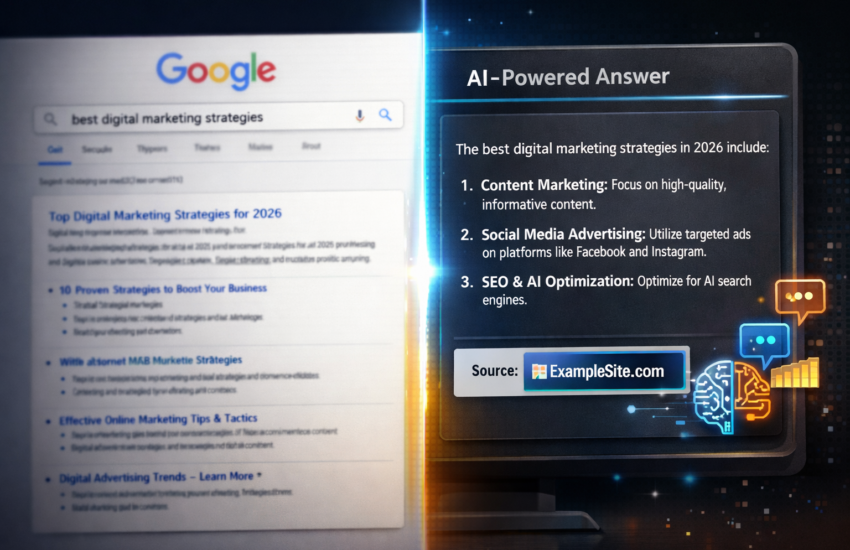
Many websites still rely on basic keyword optimization, backlinks, and rankings, but modern AI search systems evaluate content differently. Instead of simply ranking pages, AI engines summarize information and cite sources directly in answers, reducing the need for users to click multiple links.
As a result, the goal of SEO is shifting from ranking pages to becoming a trusted source within AI-generated answers.
In this article, we’ll explore why surface-level SEO tactics are failing and how to optimize your website for AI search visibility.
Why Traditional SEO Is Changing
AI search engines such as ChatGPT-powered tools, Google AI Overviews, and other generative search platforms present users with summarized answers instead of only listing links.
This means:
- AI systems extract information directly from websites
- Users may receive answers without visiting a website
- Content must be clear, structured, and trustworthy to be cited
Studies show that when generative AI answers appear in search results, only about 8% of users click traditional links.
This dramatic shift means businesses must rethink their SEO strategies.
What Are Surface-Level SEO Tactics?
Surface-level SEO tactics refer to outdated or minimal optimization practices such as:
- Keyword stuffing
- Thin blog content
- Generic AI-generated articles
- Over-optimized backlinks
- Low-quality content updates
While these tactics may have worked years ago, AI-driven search systems now prioritize context, authority, and extractable information instead of simple keyword signals.
How AI Search Engines Evaluate Content
Modern AI search engines analyze content differently than traditional algorithms.
Instead of ranking pages purely by keywords, they focus on:
1. Answer-First Content
AI systems prefer content that provides direct answers immediately after headings.
For example:
Bad Structure
Long introduction → vague explanation → answer buried in paragraph.
Good Structure
Question → direct answer → supporting explanation.
Content written this way is easier for AI models to extract and cite.
2. Structured and Scannable Content
AI systems perform better with well-organized content that includes:
- Clear headings
- Bullet lists
- Short paragraphs
- FAQ sections
These structures help AI tools summarize content accurately and reuse it in generated answers.
3. Topical Authority
Search engines increasingly reward deep expertise instead of shallow articles.
Rather than writing dozens of small posts, successful SEO strategies now focus on topic clusters and pillar pages that cover a subject comprehensively.
For example:
Pillar Topic
→ SEO for Small Businesses
Supporting Articles
→ Technical SEO checklist
→ On-page SEO guide
→ AI SEO strategies
This signals expertise and improves visibility across multiple search queries.
4. Structured Data and Schema
Structured data plays an important role in AI search visibility because it helps systems understand the context of a page.
Important schema types include:
- Article Schema
- Organization Schema
- Author Schema
- FAQ Schema
Structured data helps AI engines identify the source, author, and credibility of content more easily.
5. Multimodal Content Optimization
AI search engines increasingly analyze text, images, and videos together.
To improve visibility, websites should:
- Add descriptive image alt text
- Include videos with transcripts
- Repurpose content across platforms
This provides more signals for AI systems to interpret and cite content correctly.
The Rise of Answer Engine Optimization (AEO)
A new strategy called Answer Engine Optimization (AEO) focuses on optimizing content to appear in AI-generated answers.
Instead of optimizing only for rankings, AEO aims to:
- Provide direct answers to questions
- Structure content for AI extraction
- Build authority across the web
Experts predict that brands relying solely on traditional SEO may see 20-40% declines in organic traffic if they fail to adapt to AI-driven search.
Practical Steps to Improve AI Search Visibility
Here are actionable strategies you can implement today:
1. Write Answer-Focused Content
Start sections with direct answers before explanations.
2. Use Clear Content Structure
Include headings, lists, tables, and FAQs.
3. Build Topical Authority
Create pillar pages and internal link clusters.
4. Add Structured Data
Implement schema markup for content and authors.
5. Publish Original Insights
Use case studies, surveys, or unique data.
Unique information increases the chances that AI engines will cite your content.
The Future of SEO: Visibility Beyond Rankings
The future of SEO is not just about ranking on Google anymore.
Instead, success will depend on:
- Being cited in AI answers
- Establishing topical authority
- Building trust and credibility
- Publishing high-quality, structured content
Websites that adapt early will benefit from the growing influence of AI-driven search.
Final Thoughts
Surface-level SEO tactics are no longer enough in the era of AI search.
Businesses must shift their focus from ranking pages to becoming authoritative sources of information that AI engines trust and reference.
By adopting strategies like answer-first content, structured data, topical authority, and multimedia optimization, you can significantly improve your chances of appearing in AI-generated search results.
The sooner you adapt, the better positioned your website will be for the future of search.
