
Search engines are the backbone of the internet. Every time someone searches for a product, service, or answer, search engines decide which websites get visibility—and which remain hidden.
Understanding how search engines work is no longer optional. In 2026, SEO is driven by AI, user intent, and trust signals, making it essential for businesses and marketers to adapt.
What Is a Search Engine?
A search engine is a system that discovers, indexes, and ranks content across the web to deliver the most relevant results to users.
Popular examples include:
- Bing
- Yahoo
- DuckDuckGo
Modern search engines don’t just show links—they provide:
- Instant answers
- AI-generated summaries
- Personalized results
This shift has transformed traditional SEO into a more advanced strategy focused on visibility, authority, and user experience.
How Search Engines Work (Step-by-Step)
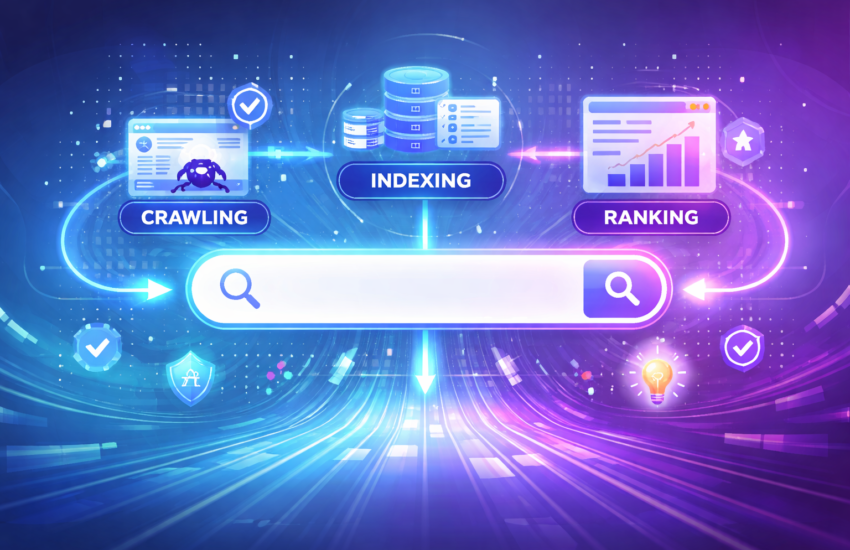
Search engines operate through three main processes:
1. Crawling
Search engines use bots (also called spiders) to scan websites and discover new content.
2. Indexing
Once content is found, it is stored in a massive database called an index.
3. Ranking
When a user searches, the engine ranks pages based on:
- Relevance
- Quality
- Authority
- User intent
Only the most valuable pages appear on the first page—this is where SEO plays a critical role.
Evolution of Search Engines
Early Search Engines (Keyword-Based)
Initially, search engines relied on simple keyword matching, which often resulted in:
- Spammy results
- Poor user experience
These systems failed because they couldn’t understand context or intent.
Modern Search Engines (AI-Driven)
Today’s search engines are powered by:
- Artificial Intelligence
- Machine Learning
- Natural Language Processing
They now focus on:
- Understanding user intent
- Delivering direct answers
- Personalizing search results
Search is no longer just about “blue links”—it’s about intelligent discovery.
Types of Search Engines
1. Traditional Search Engines
Examples: Google, Bing
- Provide ranked web pages
- Use complex algorithms
2. AI Search Engines
Examples: ChatGPT, Google AI Overviews
- Provide direct answers
- Reduce clicks (zero-click searches)
3. Vertical Search Engines
- Amazon (products)
- YouTube (videos)
- LinkedIn (jobs & professionals)
These platforms focus on specific types of content.
Why Search Engines Matter for SEO
Search engines control:
- Website traffic
- Online visibility
- Lead generation
If your website doesn’t rank, it practically doesn’t exist online.
In today’s environment:
- Only a few results get most clicks
- AI answers reduce traditional traffic
- Trust and authority matter more than ever
Key Ranking Factors in 2026
To succeed in SEO, focus on these critical factors:
1. User Intent
Search engines prioritize content that directly solves user problems.
2. Content Quality
High-quality, helpful, and original content ranks better.
3. Authority & Trust (E-E-A-T)
Websites with expertise and credibility perform better.
4. Technical SEO
- Fast loading speed
- Mobile-friendly design
- Proper indexing
5. Engagement Signals
- Time on page
- Click-through rate
- Bounce rate
The Rise of AI in Search
Search engines are rapidly evolving into answer engines.
Instead of showing 10 links, they now:
- Provide instant answers
- Summarize content
- Reduce the need to click
This has led to:
- Zero-click searches
- Increased competition for visibility
- A shift from ranking → being featured
As experts note, SEO is moving beyond rankings to discoverability and visibility across platforms.
SEO Strategy for the Future
To stay ahead, your strategy should include:
1. Focus on Intent, Not Just Keywords
Understand what users actually want—not just what they search.
2. Create Deep, Valuable Content
Thin content no longer works. Build authority with:
- Guides
- Case studies
- Real insights
3. Optimize for AI & Featured Snippets
Structure your content for:
- FAQs
- Direct answers
- Clear headings
4. Build Topical Authority
Cover a topic completely instead of writing random blogs.
5. Diversify Traffic Sources
Don’t rely only on Google:
- Social media
- YouTube
- Email marketing
Common SEO Mistakes to Avoid
- Keyword stuffing
- Ignoring user intent
- Publishing low-quality content
- Poor website speed
- Not optimizing for mobile
Final Thoughts
Search engines are smarter than ever. They no longer just match keywords—they understand meaning, context, and intent.
If you want to rank in 2026:
- Focus on value, not tricks
- Build trust and authority
- Optimize for both humans and AI
Because in modern SEO, it’s simple:
👉 If search engines understand your content, you win.
👉 If they don’t, you disappear.
(Optional CTA for Your Business)
If you want your website to rank higher and generate real leads,
Crack Web Solution can help you with:
- SEO optimization
- Website development
- Digital marketing strategy
